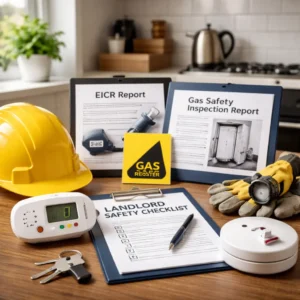
This comprehensive guide will help you understand your obligations and responsibilities as a landlord. Whether you’re a first-time landlord wondering how to rent out your house or have let properties before, you will be governed by more than 145 pieces of legislation. Ever-changing regulations can result in you unwittingly breaking the law, so you must stay up to date. For those seeking expert property management advice, working with an experienced team can help you remain compliant and confident throughout the process.
Do You Need a Landlord Licence to Rent Out Your Property?
Selective Licensing in England: What Landlords Must Know
Check whether you need a license from your local council before renting out your property. If your local authority has introduced landlord licensing, then it will be illegal to operate without one.
The Housing Act 2004 introduced Selective Licensing to help ensure landlords maintain their rental properties to a good standard, particularly in areas which are experiencing low housing demand and/or suffering from anti-social behaviour.
How Much Can You Charge in Rent? Setting the Right Rental Price
Get to know your market and find out how much similar properties in your area are being let for, so you can set your rent accordingly. Think about your target demographic and consider who your property would be suitable for: families, students, single professionals. It’s also important to factor in your financial obligations, including tax on rental income, to understand your potential returns.
Furnished vs Unfurnished: Which Achieves Better Rental Value?
Decide whether to let the property as furnished or unfurnished. In Doncaster, most tenants seem to prefer unfurnished, with the exception of high-end flats, where demand tends to be 50:50. In larger cities, most tenants require furnished. We are convinced that having a fully furnished house/flat adds nothing to the rental value in Doncaster, again this is unique and not the same elsewhere.
A property that offers a blank canvas is more appealing to most prospective tenants, but students are unlikely to have accumulated enough belongings to furnish a house.
Your Legal Responsibilities as a Landlord: An Overview
If you are exploring how to buy a house to rent out, understanding your legal responsibilities from the very beginning is essential. The role of a landlord is not an easy one. To put it into perspective, there are currently around 145 pieces of legislation you need to adhere to when letting a property. By law, you must ensure your property is fit for purpose, and the safety of your tenants is paramount. Take a look at our detailed guides to help you get to grips with your responsibilities.
See pages on Electrical Safety Standards, Safety Responsibilities for Landlords, and Gas Safety Checks for Landlords. See below
Right to Rent Checks in England: A Landlord’s Legal Obligation
In England, landlords are expected to carry out Right to Rent checks in line with the Immigration Act. You must check whether your tenants have the right to live in the UK lawfullyfailure to do so can lead to a fine or jail term.
Tenancy Agreements and Deposit Protection: Your Obligations as a Landlord
In Scotland, it’s a legal requirement to provide a written tenancy agreement, and it is considered best practice in the rest of the UK. Understanding the requirements to rent a house is essential for landlords, as failing to meet your legal obligations can render parts of your tenancy agreement unenforceable.
If you are asking what I need to rent my house out legally, providing a compliant tenancy agreement is one of the most fundamental steps. The agreement outlines everyone’s responsibilities, but remember, just because something’s in the agreement and signed, it doesn’t mean it’s enforceable. In England, when issuing the tenancy agreement, tenants must also be provided with a copy of How to rent: the checklist for renting in England.
Government-Approved Tenancy Deposit Schemes in the UK
If you take a deposit from your tenant, you must protect it in a Government-approved tenancy deposit protection scheme.
https://www.depositprotection.com
Tenancy Deposit Caps: How Much Can Landlords Charge?
Deposits must be protected within 30 days of receipt. In England, tenancy deposits are capped at five weeks’ rent where the annual rent is less than £50,000, and six weeks’ rent where the annual rent is £50,000 or more. There is no formal cap on tenancy deposits in Wales.
What Happens If You Fail to Protect a Tenant’s Deposit?
Once protected, the ‘Prescribed Information’ generated must be served to the tenant; it outlines the scheme used and whether it’s insurance-based or custodial. Failure to protect a deposit will lead to problems over eviction, the full return of the deposit and a fine of up to three times the value of the deposit.
Landlord Insurance: What Cover Do You Need When Renting Out Your Property?
Your current buildings and contents insurer must be made aware of your intention to let the property; you risk invalidating your policy. There are specialist policies available to landlords to protect you against potential losses. Shop around different insurance providers to find a deal that’s right for you. Whilst insurance can seem expensive, the savings and compensation offered in the long run are invaluable.
The protection most policies offer includes:
- Buildings insurance: for potential damage to the property’s structure or built-in features
- Loss of rent insurance: when you’re unable to rent out your property through no fault of your own (such as a flood or fire), this covers the potential rent lost
- Tenant default/rent guarantee insurance: covers any rent lost due to the tenant not paying
- Contents insurance: covers any contents that you have provided (tenants must get a separate policy for their belongings)
- Liability insurance: covers any legal costs if you are taken to court, e.g. if the property causes injury to a tenant or visitor.
Does Landlord Insurance Cover Legal Fees and Eviction Costs?
Be aware that in extreme cases, you might need to take a tenant to court (or they may take you to court), which will incur further costs. Some insurance policies will cover potential legal costs. However, by ensuring your responsibilities are upheld and you have followed the law correctly, you should avoid court altogether.
How to Create a Detailed Inventory to Protect Your Deposit and Property
A properly prepared inventory sets the scene for what you provide at the start of the tenancy. It plays a significant role in protecting both you and your tenant. A comprehensive inventory will help avoid disputes, whilst any such dispute that does arise at the end of the tenancy can be more easily resolved when deposit deduction boundaries are clearly understood by both parties.
Property Inspections: How Much Notice Must a Landlord Give?
Regular inspections will help, but remember you cannot legally enter the property without the tenant’s permission. It’s best practice to grant them 48 hours’ written notice (this should be stipulated in your tenancy agreement).
Make copies of any keys a tenant may need for windows, doors, gas supply and electricity meters. It’s also worth digging out instruction manuals for the boiler, cooker, white goods, thermostat or house alarm so tenants know how to use them properly.
Electrical Safety Standards for Landlords: EICR Requirements
These questions cover the basics and should give you a good idea of what you need to do as a landlord. To fully comply with the regulation with confidence, we recommend turning to your ARLA Propertymark Protected letting agent for further guidance.
What Is an EICR and What Does It Cover?
All fixed electrical cables and equipment will need to be inspected and tested by a qualified person in accordance with the 18th edition of the wiring regulations.
This includes appliances that are fixed directly to the electrical supply, such as showers or fitted kitchen appliances. Once a qualified person has carried out their inspection and tests, they will provide an Electrical Installation Condition Report.
The electrical safety standards for the private rented sector in England came into force on 1 June 2020 and apply to all new tenancies from 1 July 2020 and all existing tenancies from 1 April 2021. The regulation sets out new rules for landlords to ensure all fixed electrical installations are safe and maintained correctly.
It is a legal requirement for landlords to carry out electrical safety inspections for all new and existing tenancies in Scotland. There are two parts that you are required to complete: inspection of installations, fixtures and fittings, and a record of testing of appliances. Tests must be carried out at least every five years by a competent person. After an inspection, you must provide a copy of the inspection document to your tenants. When a new tenancy starts, you must give a copy of the most recent inspection to the tenants. For electrical safety advice, see electricalsafetyfirst.org.uk
The current EICR must be made available to the tenant within seven days of their occupation date. Failure to comply with any of the regulations could result in prosecution.
This report includes the results of the inspection and test carried out, and will state the date for the next inspection and test. Typically, an Electrical Installation Condition Report (EICR) is the type of safety report you will receive, but there are alternatives.
Which Tenancies Require an Electrical Installation Condition Report?
Any new fixed-term tenancy that starts on or after 1 July 2020 will need to adhere to electrical safety standards. For existing tenancies, you have until 1 April 2021. Be aware that because the rules came into force on 1 June 2020, tenancies signed on or after 1 June 2020, which start on or after 1 July 2020, should comply with the regulations.
The electrical safety standards apply to all tenancies in residential property unless excluded.
This includes:
- Assured Shorthold Tenancies
- Assured Tenancies
- Licences to occupy
- Secure Tenancies
- Regulated Tenancies
- Rent act tenancies
- Rent agriculture tenancies
- Non-housing Act tenancies
Examples of excluded tenancies are:
- Social housing
- Long leases
- Student halls of residence
- Hostels and refuges
- Care homes
- Hospitals and hospices
- Shared accommodation with a landlord or landlord’s family
A renewed fixed-term tenancy is a new tenancy; therefore, from 1 July 2020, all renewed fixed-term tenancies need to adhere to electrical safety standards.
A tenancy that ends and is renewed as a Statutory Periodic tenancy is classed as a new tenancy, and from 1 July 2020 need to adhere to electrical safety standards.
Contractual Periodic tenancies that state that a rolling monthly tenancy will commence at the end of the fixed-term are considered the same tenancy. Therefore, you have until 1 April to adhere to electrical safety standards.
What Qualifies Someone to Carry Out an Electrical Inspection?
Someone competent to undertake the inspection, testing and any remedial work in accordance with the electrical safety standards. Usually this person will be part of a competent persons scheme, for example NAPIT or NICEIC.
Remedial Work After an EICR: Landlord Obligations and Timescales
Once you have the Electrical Installation Safety Report, you must:
- Supply a copy to each existing tenant of the property within 28 days of the inspection and test
- Supply a copy of the most recent report to any new tenant before they move in
- Supply a copy of the most recent report to any prospective tenant within 28 days of receiving the request
- Retain a copy of the report and give it to the qualified person carrying out the next inspection
- Supply a copy to the local authority within seven days when requested
How long does the Electrical Installation Safety Report last?
Under the regulations, every fixed electrical installation at the property must be inspected and tested at least every five years by a qualified person.
What happens if the electrical installation needs further work to meet the standards?
This is called remedial work and should be carried out by a qualified person within 28 days of the report, or the period specified in the report if less than 28 days.
Once completed, you should receive written confirmation from the qualified person that the remedial work has been carried out. This will then need to be sent with a copy of the report to the existing tenant and your local housing authority.
Does my electrical installation need to comply with the 18th edition of the Wiring Regulations?
No, not if it is still deemed to be safe. Landlords with existing reports should check these reports and contact the inspector in order to decide whether the electrical installation complies with electrical safety standards.
If my certificate says ten years, do I still need to renew every five years?
If an existing certificate was issued more than five years ago, regardless of whether it is valid for ten years, it will not be applicable to these regulations. Consequently, to comply with the electrical safety standards, the existing EICR must be less than five years old (dated back five years from when the tenancy agreement was signed).
Penalties for Failing Electrical Safety Standards: Up to £30,000
Local authorities can issue a fine of up to £30,000. Before imposing a financial penalty, the local authority must serve a Notice of Intent within six months from when the landlord is in breach, outlining the amount, reasons and right to appeal.
Smoke Alarms and Carbon Monoxide Detectors: Landlord Legal Requirements
It is a legal requirement for all rental properties in England to adhere to the Smoke and Carbon Monoxide Alarm (Amendment) Regulations 2022. All landlords should fully understand these regulations, and you (or your agent) should ensure alarms are in place. Any landlord found to be in breach could be fined up to £5,000.
Since 2015, it has been a legal requirement for at least one smoke alarm to be installed on each storey of the property where a room is used as living accommodation.
Carbon monoxide alarms must be installed and in proper working order in any room used as living accommodation which contains a fixed combustion appliance (excluding gas cookers). These appliances are generally powered by gas, oil, coal or wood, like gas or oil-burning boilers or a wood-burning stove. There should also be at least one smoke alarm on every floor of the property where a room is used or partly used as living accommodation.
Every alarm must be in proper working order on the first day of a new tenancy. Any alarms must be repaired or replaced once you have been informed that they have been found faulty.
Legionella Risk Assessments: Landlord Responsibilities Under UK Law
Legionnaires’ disease is a pneumonia-like infection commonly caused by inhaling small droplets of water contaminated with Legionella bacteria. Landlords must assess and control the risk of tenants’ exposure to Legionella.
Legionella Control Measures Every Landlord Should Implement
Control measures include:
- Flushing out the water system before letting the property
- Ensuring cold water tanks have a tight lid to stop debris from getting into the system
- Setting control parameters to ensure water is stored at the correct temperature
- Removing unused pipework
You should inform your tenants about control measures they can take. These could include cleaning showerheads or running all the taps for five minutes if they’ve been off. Tell them to let you (or your agent) know if problems occur with the water system, or if the water’s not heating properly.
You should keep records of any legionella assessments and plan follow-up checks to be carried out periodically.
Gas Safety Checks for Landlords: Legal Requirements and Certificates
Understanding how renting a house works from a legal standpoint means knowing that gas safety is one of your most critical annual obligations. You must arrange an annual safety check on all gas appliances and flues with a Gas Safe registered engineer. You can arrange a gas safety check two months before your current certificate’s expiry date, whilst retaining that expiry date (like a car’s MOT).
This will help you find a suitable time with your tenant to carry out the check and comply with the law. Keep on track with your safety checks by setting up a free reminder at StayGasSafe.co.uk.
If the tenant has their own gas appliances, you are still responsible for maintaining the pipework, but not the appliance itself or any flues that solely connect to tenant-owned appliances.
It is also your responsibility to make sure that any gas pipework in the property is maintained and kept in a safe condition. Regular inspections will highlight any repairs you need to make. To minimise disruption, it is good practice for an engineer to inspect and test the pipework between tenancies.
It’s worth noting that installation pipework is not covered by the annual gas safety check, so ask your engineer to carry out a tightness test on the gas system and visually examine the pipework for any defects.
What do you need when renting a house out to tenants? Before the tenancy starts, you need to make sure that all the gas equipment including any appliances left by a previous tenant is safe. If this is not the case, make sure you get it fixed or removed before a new tenant moves in.
Gas Safety Records: What Landlords Must Keep and Share
The Gas Safe registered engineer will issue a record of the annual safety check. You must give a copy of the record to your tenant within 28 days of the check being completed, or to a new tenant at the start of their tenancy.
You will need to retain copies for at least two years. You can keep your records electronically, provided you can issue a hard copy if requested, they’re secure from loss and interference, and clearly identify the engineer who issued the record.
‘Do Not Use’ Warnings: Landlord Obligations Explained
Since January 2013, flues that remove fumes from a sealed, fan-assisted boiler which are concealed in a void (e.g. in a ceiling, behind a wall or within boxing) must have suitably sized inspection hatches installed so that the entire length of the flue can be inspected by a Gas Safe registered engineer.
If a flue is inaccessible, or the hatches are not positioned correctly or of adequate size to allow the entire flue to be inspected, the engineer will classify the appliance as ‘at risk’ and apply a ‘Danger safety warning do not use’ label to the appliance.
If an engineer has turned an appliance off and issued a warning notice, the appliance must not be turned on under any circumstances. The ‘Do not use’ sticker must not be removed until an engineer has rectified the defects your tenant has a duty not to use the appliance.
If a heating appliance has been disconnected, you must provide your tenants with emergency heating whilst arranging for appropriate remedial work to be done.
What to Do If a Tenant Refuses a Gas Safety Inspection
The tenancy agreement should specify that access must be granted for maintenance or safety checks to be carried out, but you must not use force to enter the property.
If your tenant is refusing access, you must keep a record of all the reasonable actions you have taken to comply with the law. Make sure you can provide evidence of repeated attempts to carry out the safety check by writing to your tenant and explaining that a safety check is a legal requirement in place for their own safety.