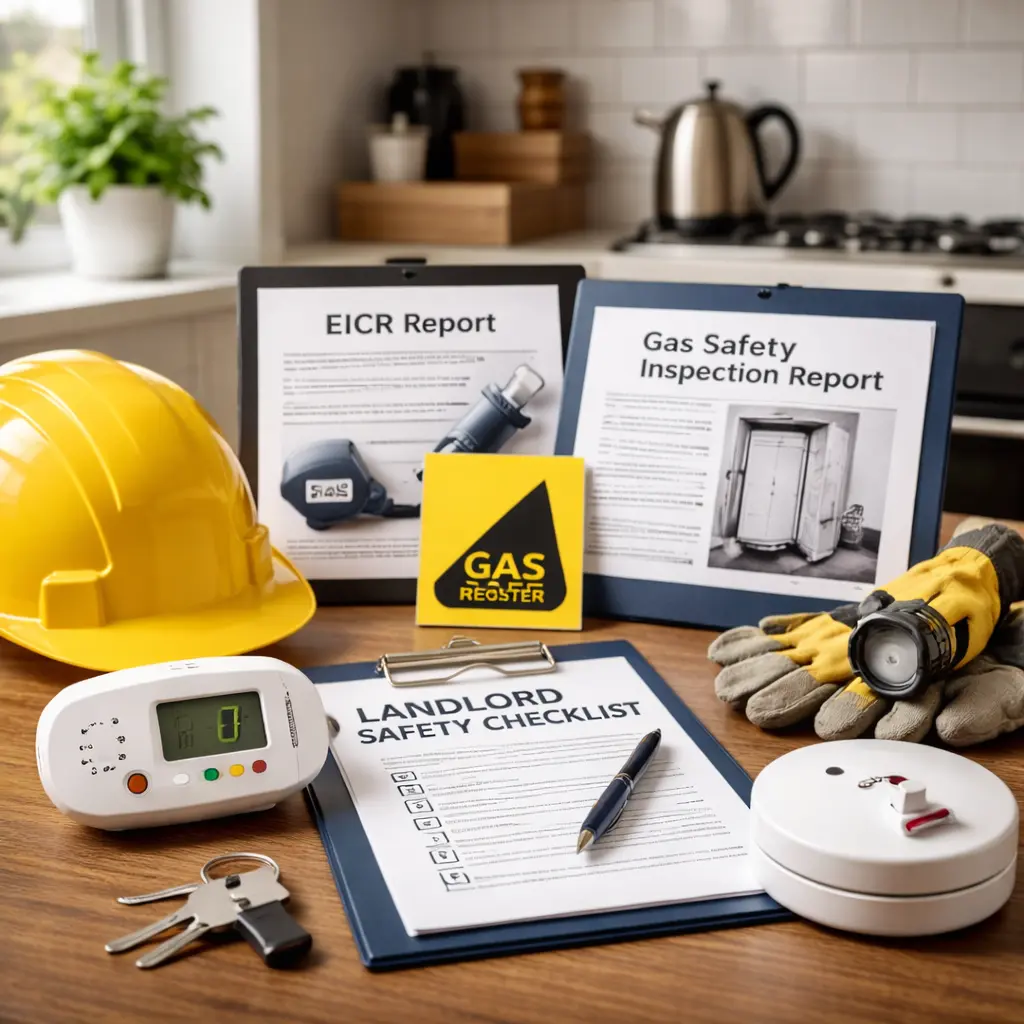
When it comes to your responsibilities as a landlord, the safety of your tenants must be your top priority. Understanding your landlord compliance obligations and staying on top of your landlord responsibilities checklist is essential not just to protect your tenants, but to protect yourself from potentially serious legal and financial consequences. To help you get to grips with what’s expected, we have outlined the main safety concerns you need to be aware of and the legal requirements for landlords you must adhere to. If you prefer professional support, working with trusted local letting agents can help you stay compliant and confident.
Smoke Alarms and Carbon Monoxide Detectors: Legal Requirements
Smoke Alarm and CO Alarm Rules in England
It is a legal requirement for all rental properties in England to adhere to the Smoke and Carbon Monoxide Alarm (Amendment) Regulations 2022. All landlords should fully understand these regulations, and you (or your agent) should ensure alarms are in place. Any landlord found to be in breach could be fined up to £5,000.
Since 2015, it has been a legal requirement for at least one smoke alarm to be installed on each storey of the property where a room is used as living accommodation.
Carbon monoxide alarms must be installed and in proper working order in any room used as living accommodation which contains a fixed combustion appliance (excluding gas cookers). These appliances are generally powered by gas, oil, coal or wood, like gas or oil-burning boilers or a wood-burning stove. There should also be at least one smoke alarm on every floor of the property where a room is used or partly used as living accommodation.
Every alarm must be in proper working order on the first day of a new tenancy. Any alarms must be repaired or replaced once you have been informed that they have been found faulty.
Electrical Safety Standards for Landlords
In England, Wales and Scotland, you have a legal duty to ensure that any electrical items you have provided in your rental property are safe throughout a tenancy. As well as all appliances, you must also ensure all electrical systems such as sockets, switches and light fittings are safe. Staying compliant with these duties is a key part of responsible property management and helps protect both your tenants and your property investment.
EICR Requirements in England
The electrical safety standards for the private rented sector in England came into force on 1 June 2020 and apply to all new tenancies from 1 July 2020 and all existing tenancies from 1 April 2021. The regulation sets out new rules for landlords to ensure all fixed electrical installations are safe and maintained correctly.
Gas Safety Obligations for Landlords
Research has shown that more than one in three private landlords did not know it was their responsibility to get gas appliances checked. Understanding your gas safety certificate landlord obligations is critical; failing to comply can put your tenants at serious risk and leave you exposed to significant legal penalties. With this in mind, are you fully aware of your legal requirements concerning gas safety? If managing these requirements feels overwhelming, seeking professional property management support can help ensure you remain fully compliant.
Legionella Risk Assessments: Landlord Responsibilities
Legionnaires’ disease is a pneumonia-like infection commonly caused by inhaling small droplets of water contaminated with Legionella bacteria. Landlords must assess and control the risk of tenants’ exposure to Legionella.
Legionella Control Measures Every Landlord Should Implement
Control measures include:
- Flushing out the water system before letting the property
- Ensuring cold water tanks have a tight lid to stop debris from getting into the system
- Setting control parameters to ensure water is stored at the correct temperature
- Removing unused pipework
You should inform your tenants about control measures they can take. These could include cleaning showerheads or running all the taps for five minutes if they’ve been off. Tell them to let you (or your agent) know if problems occur with the water system, or if the water’s not heating properly.
You should keep records of any legionella assessments and plan follow-up checks to be carried out periodically.